


Backlinks are one of the most important aspects of Search Engine Optimisation (SEO). Whether you are running a business website, e-commerce website or even personal blog, backlinks can help boost your websites visibility, credibility and drive organic traffic.
But how exactly do backlinks play into SEO? Why do search engines such as Google value them?
This guide will explain how they work, how they affect search engines, and how to build some quality backlinks.
What Are Backlinks in SEO?
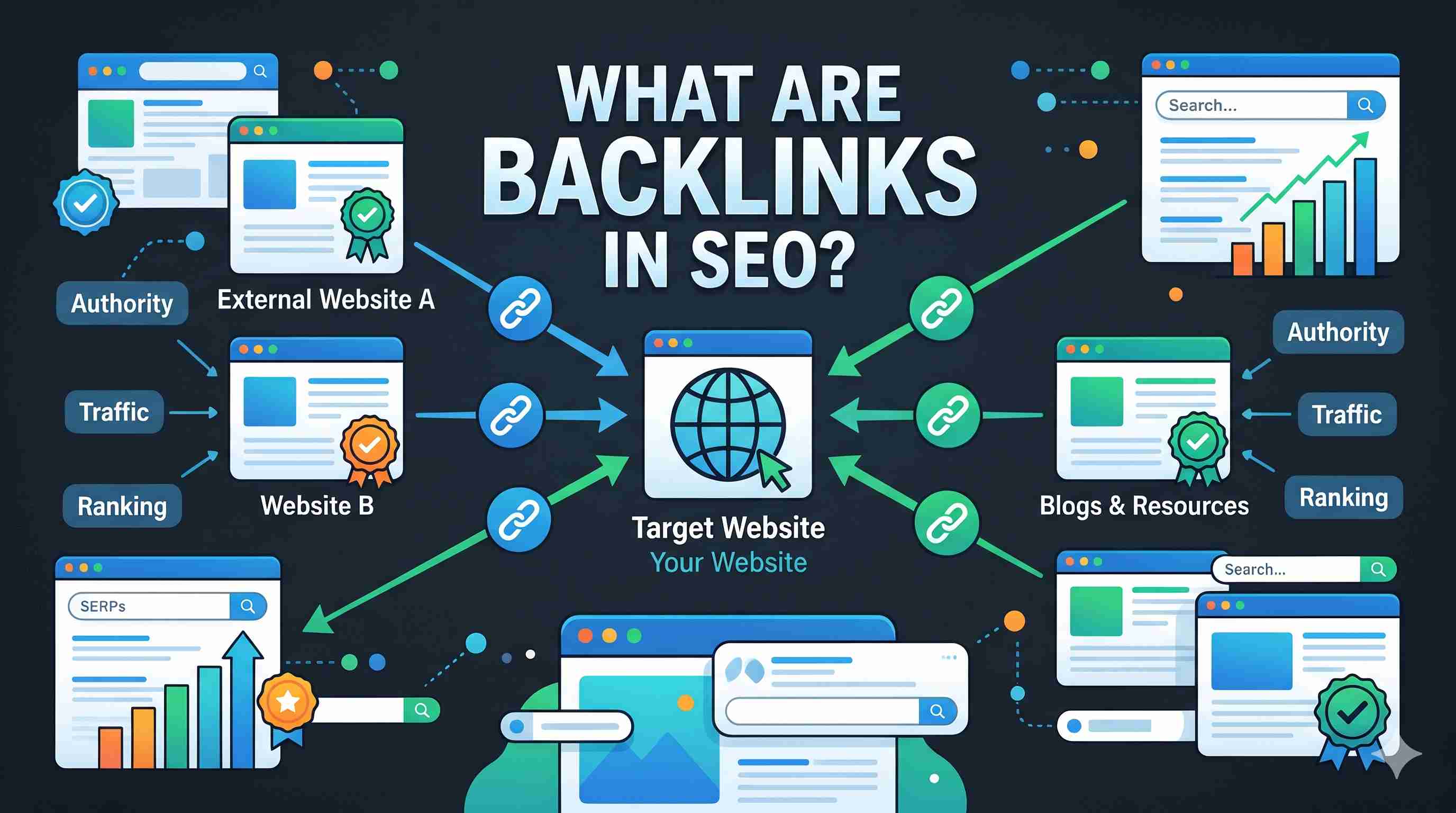
Backlinks or Inbound Links are links from one website to another.
For example, if you write an article on your website relating to digital marketing, and another website mentions your article in theirs with a link to your article this is a backlink.
The reason backlinks are important is because they allow search engines to find content. They also help show the relationship between websites.
If a high quality and relevant website links to your content it can show that your information is helpful and trustworthy.
Not all backlinks are equal though, the quality, relevance and context of backlinks are generally more important.
How do Backlinks Help Improve SEO?
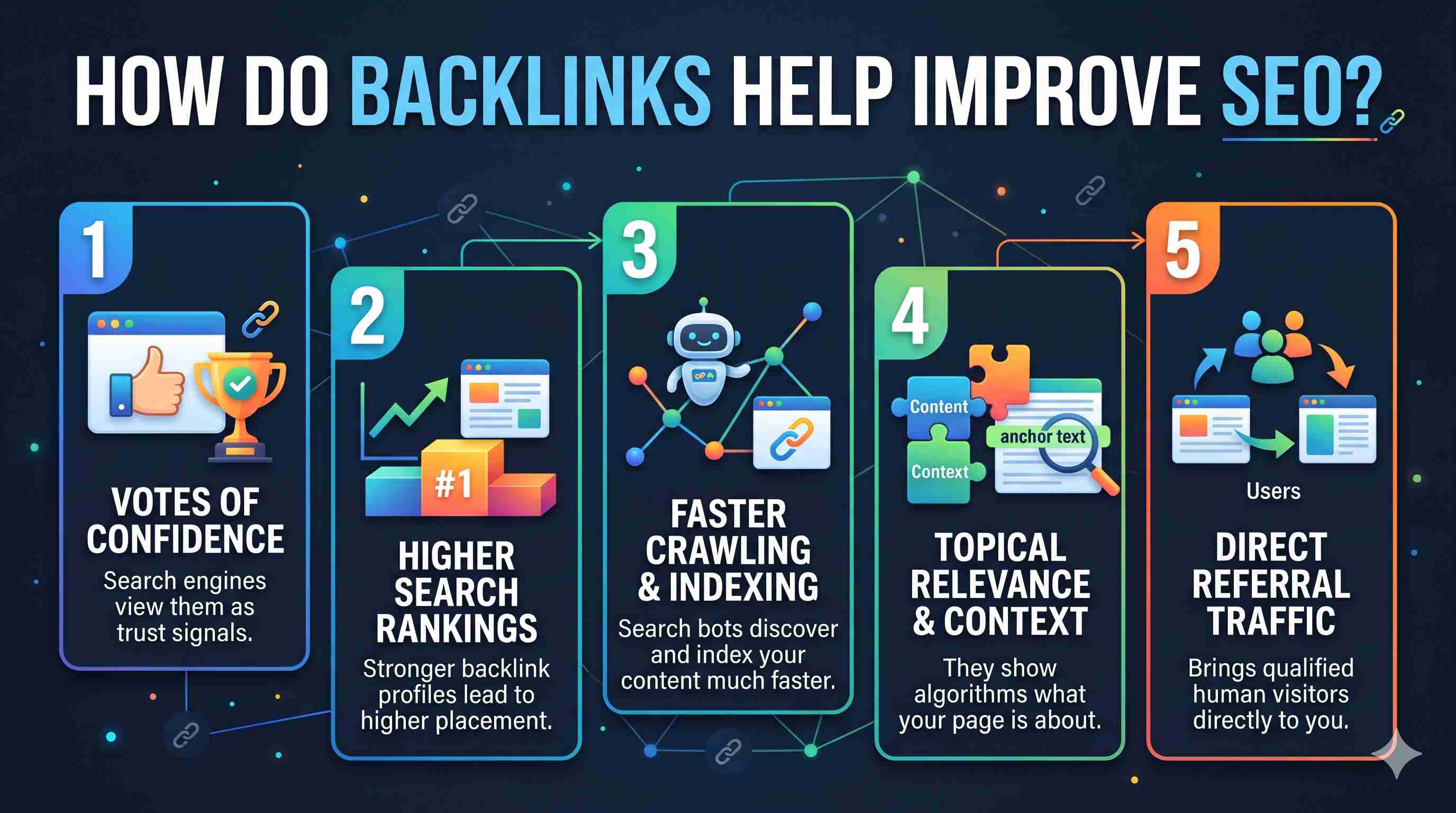
1. Backlinks Build Website Authority
One of the main benefits of backlinks is they can help improve the authority of a website.
Google have various systems to analyse links on websites. For example PageRank. These help Google understand the relationship between different webpages. This can help tell them which pages might be useful.
A backlink from a highly regarded publication within your industry is going to be far more valuable than lots of links from irrelevant websites.
SEO Benefit: Backlinks from relevant editorial sources can help boost your rankings.
2. Backlinks Can Help Improve Search Engine Rankings
Search engines use various signals to determine which websites should be shown.
Backlinks are one of these signals.
If a high quality and relevant website links to your content, this can help search engines understand how important your content is.
For example, if you are running a tech website and have earned backlinks from well known tech publications. These can help your website compete for relevant searches.
However your content will also need to be high quality, match the intent of the search, and have a good website performance.
SEO benefit: High quality backlinks can help improve your organic search performance.
3. Backlinks Allow Search Engines To Find New Pages
Search engines use bots to crawl around the internet and find content on websites.
One way they can do this is by following links.
If another website links to your new article, then this will give search engines another way to find your content.
This can be really useful for new websites.
Whilst not guaranteed to speed up the process, backlinks can help your content be found.
SEO Benefit: Backlinks give search engines more ways to find your website.
4. Backlinks Drive Referral Traffic
Backlinks can be really useful.
For example if a popular business blog has a link to your article regarding SEO strategies. People reading the article may click through to your website.
This is known as referral traffic.
Having relevant referral traffic can help you gain more potential customers, improve brand awareness and drive business enquiries.
SEO Benefit: Backlinks can drive another source of traffic and increase the reach of your content.
5. Backlinks Build Brand Authority
If websites with high authority link to your content you will see increased trust from your audience.
For example if a company is mentioned in a well-known publication, blog or organisation it can increase brand awareness and authority.
This can also provide more organic backlinks as more people become aware of your brand and content.
Overall this can increase brand authority online and establish your business as a reliable source of information.
Backlink SEO benefit: Backlinks will increase brand awareness, build brand authority and increase long term visibility.
6. Backlinks Create Context For Search Engines
Backlinks can create context around the topic of your website.
Search engines look at many factors with backlinks, such as the content around the link and anchor text.
Anchor text is the text that is clicked on within a hyperlink.
For example, if a website has a backlink to your guide with descriptive anchor text like ‘beginner’s guide to SEO’ this can provide context to search engines.
Using descriptive anchor text is generally preferred over keyword stuffing.
Backlink SEO benefit: Contextual links can help search engines understand content.
Backlink Types In SEO
Understanding more about backlink types can help create a more effective strategy.
| Backlink Type | Description |
|---|---|
| Editorial Backlinks | Backlinks that are organically gained from websites referring to your content |
| Guest Post Backlinks | Backlinks that are placed within articles written for other websites |
| Nofollow Backlinks | Backlinks that have the nofollow tag, meaning Google shouldn’t consider them as regular endorsements |
| Sponsored Backlinks | Backlinks that have been paid for or are promotional and should have the sponsored tag |
| UGC Backlinks | Backlinks from user generated content, such as forums or comments, these are usually marked with ugc |
| Directory Backlinks | Backlinks from business directories or industry lists |
A natural backlink profile may include a mix of different backlinks. However, the aim is to get relevant and trustworthy mentions.
Quality vs. Quantity: Which Backlinks Matter More?
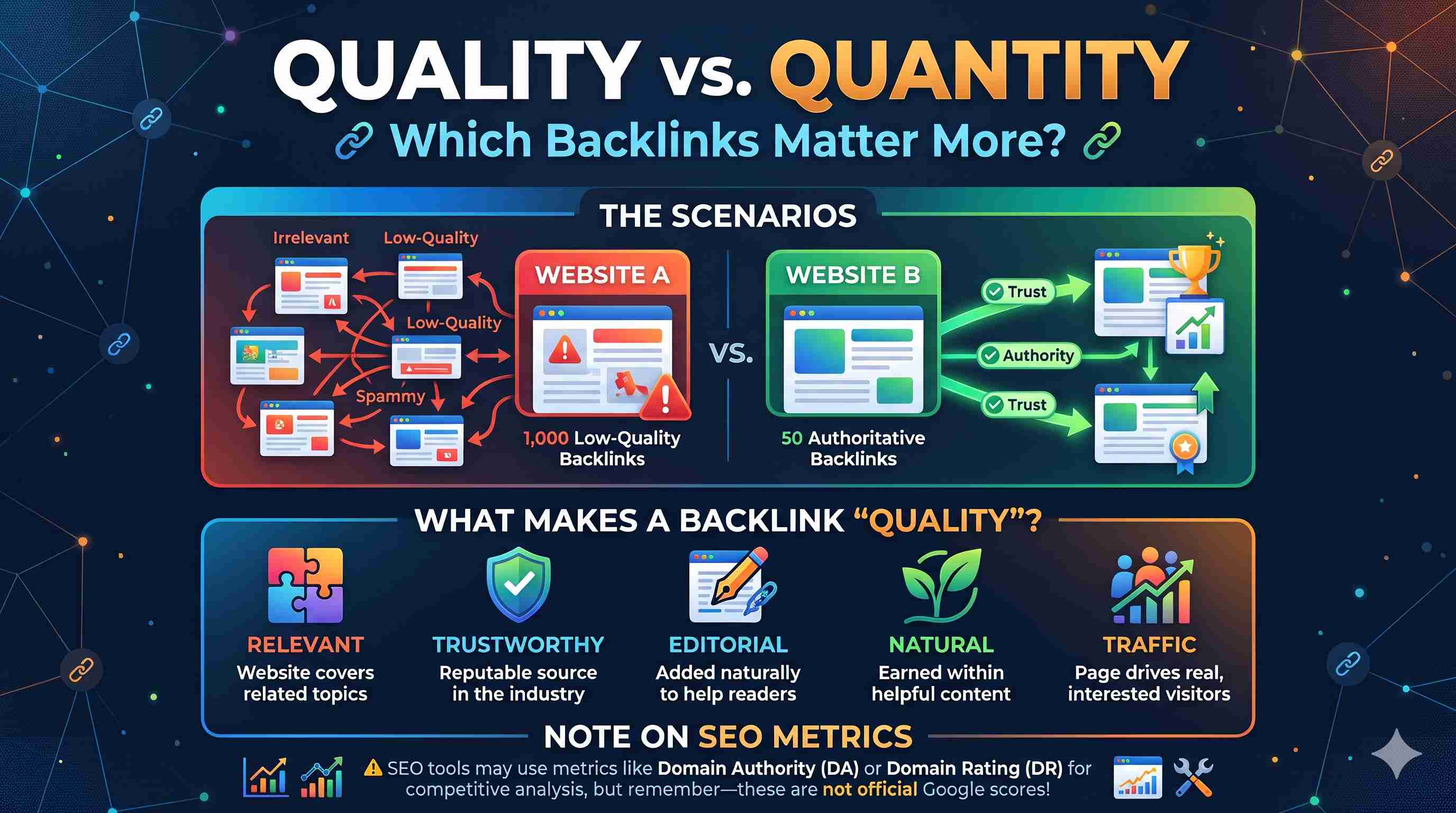
One of the most common mistakes made in SEO is thinking that more backlinks will improve your rankings.
However, quality is very important when considering backlinks
Consider two websites:
- Website A: Has 1,000 backlinks from irrelevant low quality websites.
- Website B: Has 50 backlinks from relevant authoritative industry websites.
Website B may have a higher quality backlink profile.
Some important qualities of quality backlinks include:
- Relevant: Website talks about relevant topics.
- Trustworthy: Source is trustworthy and respected within their industry.
- Editorial: Link has been added because it is helping readers.
- Natural: Backlink has appeared naturally within helpful and relevant content.
- Traffic: Page has traffic that could be interested in your website.
SEO tools may give websites scores such as Domain Authority or Domain Rating. This can be helpful for competitive analysis but they are not Google scores.
How to Build High-Quality Backlinks for SEO
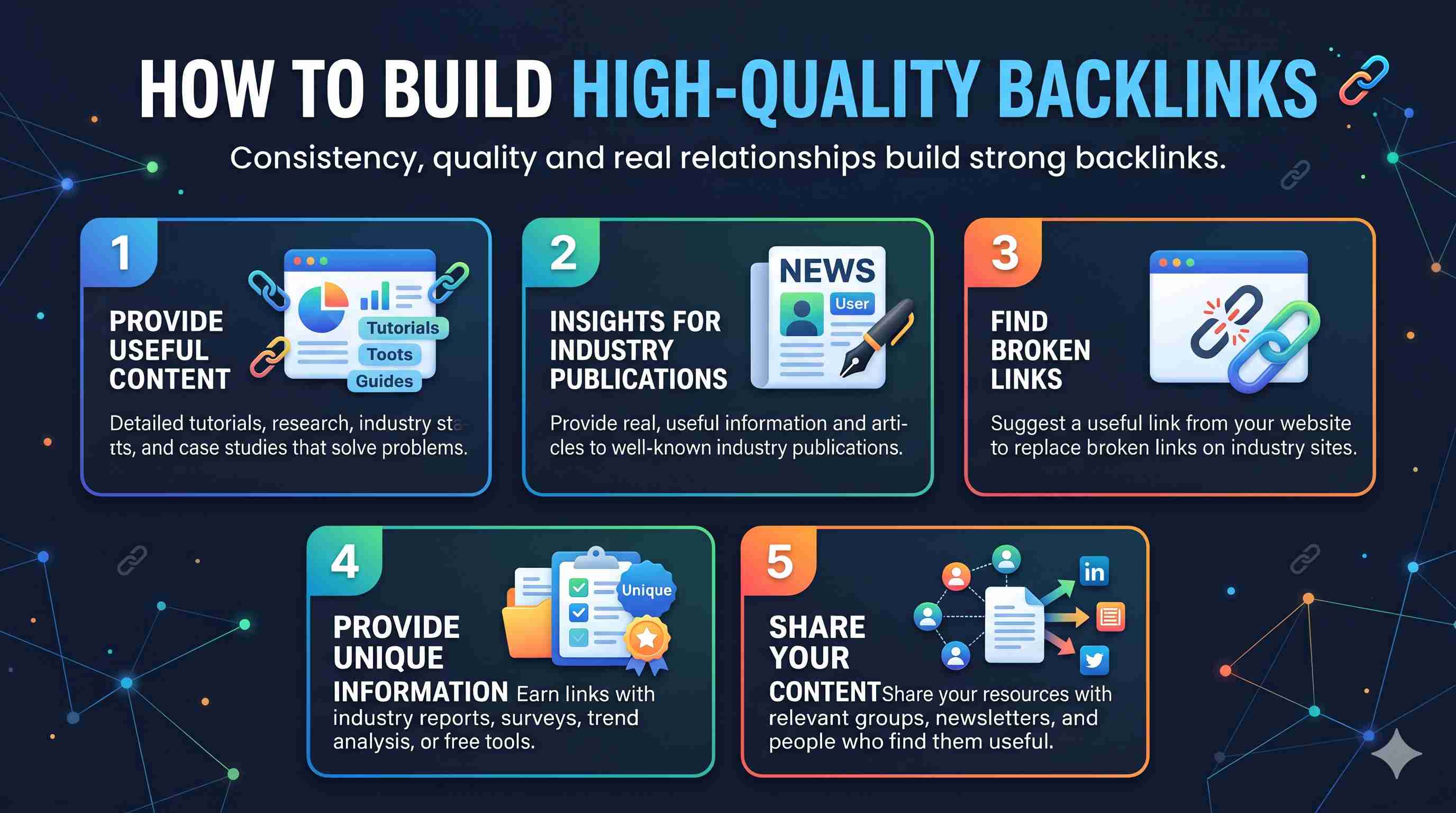
Consistency, quality and real relationships will help you create some strong backlinks.
1. Provide Useful Content
Providing useful and informative content will help you gain backlinks.
This could be in the form of detailed tutorials, research, stats for your industry, case studies and guides.
Content that provides solutions will help you gain natural backlinks.
2. Provide Useful Articles or Insights to Industry Publications
Creating insightful articles or providing useful information to well known industry publications will help you gain exposure.
Try to provide real useful information rather than just guest posting.
3. Broken Links
Broken links are when websites have links that don’t work. You can suggest a different link that fits and is useful.
If there is an article in your industry that has broken links to something that has been removed you can suggest a useful link from your website.
They may decide to change their link if your content really helps improve their article.
4. Provide Unique Information
If you provide unique information it will stand out.
A survey, research, industry report, checklist or free tool may encourage other websites to provide backlinks.
A well researched report on new trends in digital marketing may gain you mention from bloggers, journalists and industry publications.
5. Share Your Content
Even the best content will struggle to get noticed. Share your articles with relevant groups, LinkedIn groups, industry newsletters and those who may find the content useful.
This will help people find your resources and naturally provide backlinks.
Common Backlink Mistakes
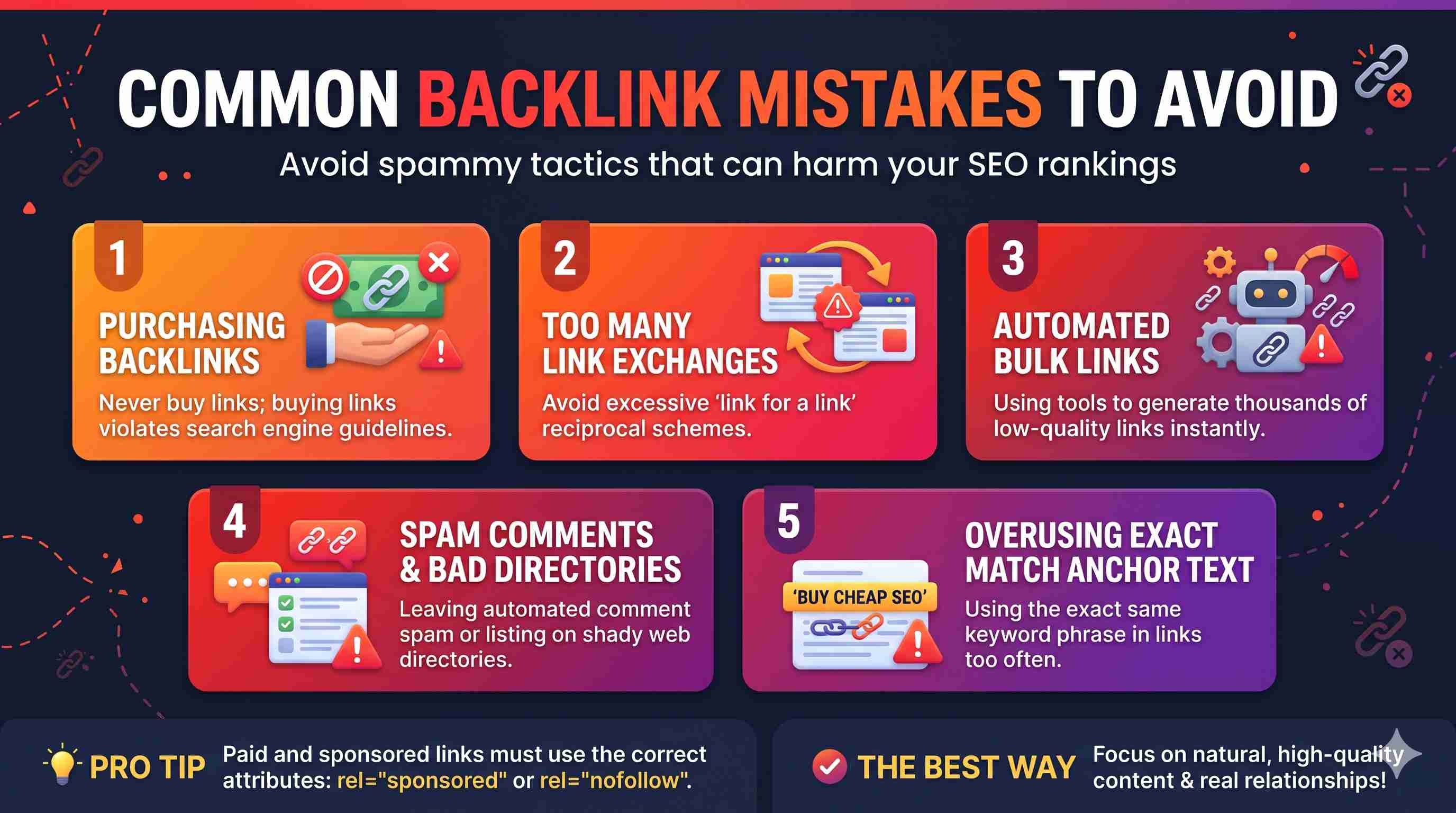
Whilst backlinks can help your SEO there are some mistakes you can make that will negatively affect your website.
Avoid the following mistakes:
- Purchasing backlinks
- Too many link exchanges
- Creating thousands of backlinks using tools
- Using spammy comment backlinks or low quality directories
- Overusing exact match anchor text.
Google sees these types of tactics as link spam and you could lose your rankings. Paid advertising and sponsored links should be using the correct link attributes (rel="sponsored", rel="nofollow").
The best way to gain backlinks is to provide quality content and build real relationships within your industry.
How to Measure the Effectiveness of Backlinks for SEO
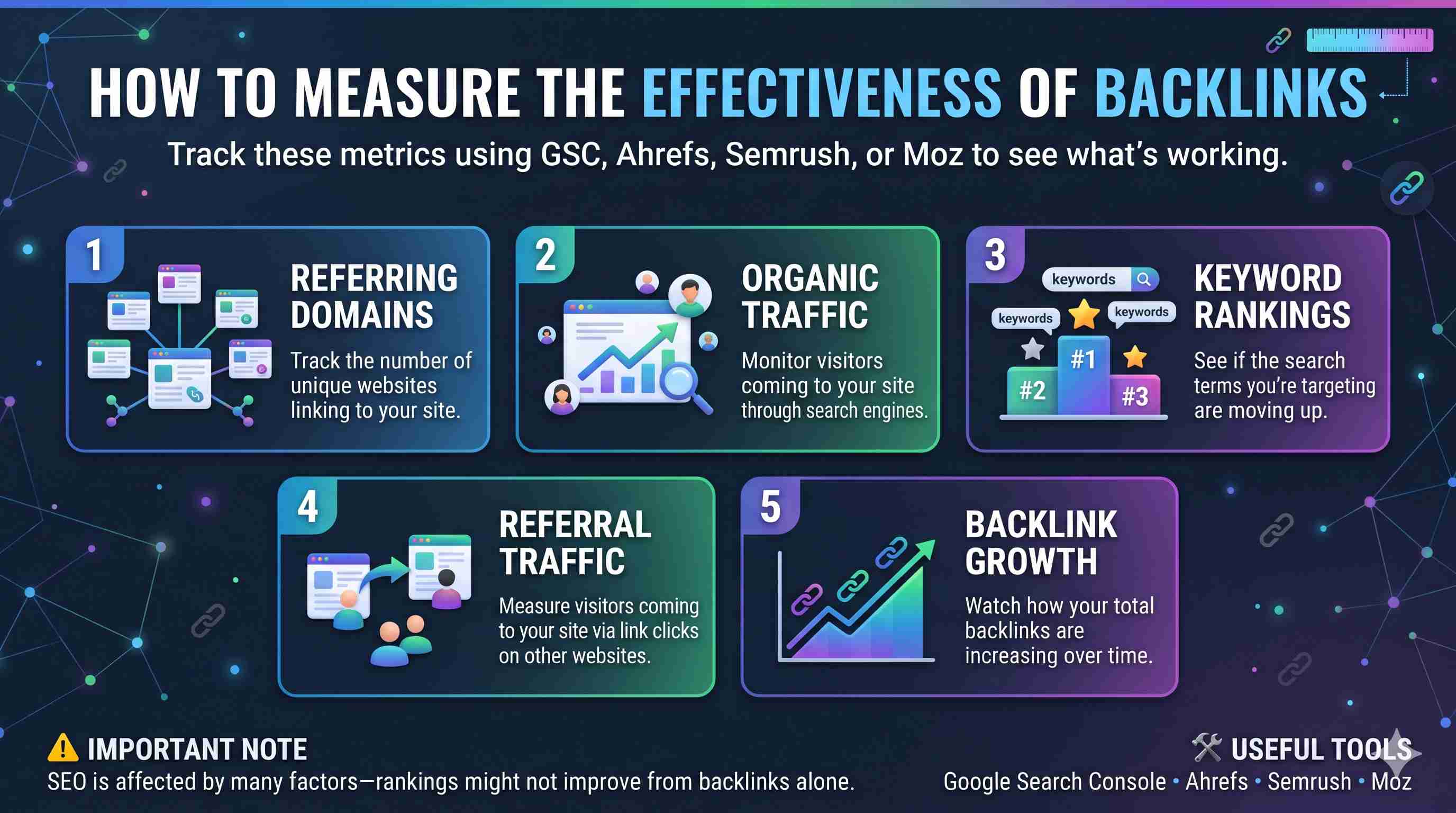
Once you have started creating backlinks it is important to measure how effective they are. Useful tools include Google Search Console, Ahrefs, Semrush and Moz.
You can measure:
- Referring domains: How many unique websites are linking to your website.
- Organic traffic: How many visitors are coming to your site via search.
- Keyword rankings: See how your keywords are performing. Are they improving?
- Referral traffic: How many visitors are coming to your site via referral.
- Backlink growth: How are your backlinks performing? Are they improving?
SEO is affected by many factors so just because your rankings have improved after gaining backlinks it doesn’t mean it is down to backlinks.
Backlink FAQs
Are backlinks still important for SEO?
Yes, Google still uses links in their ranking algorithms. However they are just one part of their overall algorithm which looks at content, quality and usefulness.
How many backlinks do I need to rank on Google?
There is no set number. This depends on how competitive your industry is, how good your content is, how relevant your content is and how good the content on the competitors pages are.
Will backlinks increase my traffic?
Yes! Backlinks can provide you with referral traffic.
Are all backlinks good for SEO?
No. Backlinks that are relevant and naturally gained could be useful however if you are trying to manipulate your rankings then they could be useless.
How long will backlinks take to improve my SEO rankings?
There is no guarantee. Search engines will need to crawl the links and there are many factors that will affect your rankings.
Conclusion
Backlinks are still an important part of a successful SEO strategy. They can help search engines find pages, see what your content is about and determine relationships between websites.
They can also help drive referral traffic, increase brand awareness and help establish credibility.
However, having a successful backlink strategy is not about gaining the most backlinks. It is about gaining relevant and trustworthy backlinks from websites that really value your content.
By creating quality content and naturally gaining backlinks whilst optimising your SEO you can improve your online presence and increase your chances of long term organic growth.
Latest Posts
-
Free Broken Link Checker Guide
Nov 03, 2026 -
How SERP Optimization Improves Google Rankings
Oct 29, 2026 -
How to Audit Your Website for Free
Oct 26, 2026